Four years. That’s how long the gray sectional has lived in your family room in Toms River. Two kids, a beagle named Bruno, and more popcorn than anyone wants to think about. The arms are darker than the cushions now. There’s a ring from somebody’s juice glass. And if you put your face near the middle seat, it smells like Bruno.
You want it clean. You also want it to survive the cleaning.
So how do you pick the right upholstery cleaner? Check the cleaning code on your furniture’s tag before you call anyone. Ask how they’ll handle that specific fabric, what products they use, and whether they deal with pet hair and odor. Make sure they’re insured. Good cleaners ask about your couch before they quote. Bad ones treat every sofa the same.
Professional Upholstery Cleaning NJ
Before you book, ask these
| Ask | Listen for |
| What does my cleaning code mean for you? | A real answer about water or solvent |
| What’s your process? | Vacuuming before anything wet |
| What do you clean with? | Mild products, not harsh chemicals |
| I have a dog. Does that change things? | A plan for hair, dander and smell |
| Will you test a spot first? | Yes |
| Are you insured? | Yes, without hesitating |
The tag under the cushion
Flip a cushion over or look along the frame. There’s almost always a care tag, and on it, a letter.
Living Spaces, the furniture store, breaks the codes down like this. W: water-based cleaner is fine. S: dry-cleaning solvents only, no water. WS or SW: either one works. X: vacuum only. No cleaning solution at all.
This matters more than anything else in this post. Use water on an S fabric and you can leave a stain bigger than the one you started with. So take a picture of that tag and text it to whoever you’re booking. If they don’t ask for it, that tells you something.
How we actually do it
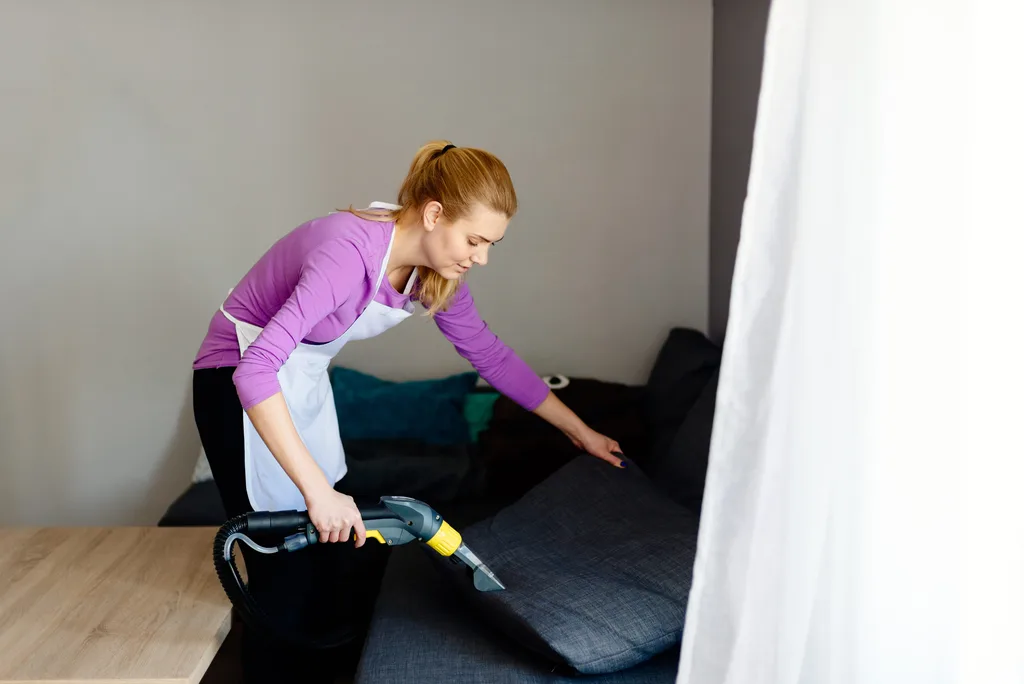
People are sometimes surprised by how unglamorous good upholstery cleaning is. No foam cannon. Mostly patience.
Stains get attention first, because a spill that sits is a spill that sets. Then we pull off the loose stuff with a dry clean or a gentle vacuum. Skipping that is a classic mistake. Wet a dusty cushion and the dust turns into a thin layer of mud that soaks right in.
After that, an enzyme treatment goes on and sits for about 10 minutes. It goes after the organic gunk. Food, drinks, skin oils. Then a dry brush by hand to loosen dirt and dander and pull it up to the surface, and a second vacuum so none of it gets pushed back down. Warm water and cleaner go on last, worked across the fabric in a grid so we don’t miss a section.
That’s the whole method. You can read more on our Upholstery Cleaning page.
Why we don’t use harsh stuff
Strong chemicals work. For about a day.
A heavy-duty cleaner can lift a stain, sure. It can also eat away at the fibers slowly, and you won’t notice until the arms start looking thin a couple of years later. We’d rather not trade a clean couch now for a worn-out one later. So it’s natural products, distilled water and a light hand. Honestly, scrubbing hard isn’t the secret. Getting to the stain fast and using the right technique is.
Got a dog on the couch?
Say so when you book. Pet hair and dander dig deep, and the smell goes with them. The dry brushing and double vacuum help a lot here, because they pull dander out instead of just wetting the top layer.
And look down. If Bruno sheds on the sofa, he sheds on the rug too. You can add Carpet Cleaning to the same visit. If the whole house needs it, our Home & Office Cleaning crew does that.
How often?
Every 6 to 12 months, depending on use. The chair in the formal living room that nobody sits in? Once a year. The sectional where the dog naps every afternoon? Every six months is more realistic. Most wear comes from grit getting ground in every time someone sits down, not from cleaning. Timing gets its own post: How Often Should Sofas and Upholstered Chairs Be Professionally Cleaned?
Walk away if you hear this
“We clean everything the same way.” Or “every stain will come out, guaranteed.” Neither is true. Results depend on how old the furniture is and what it’s made of, and an honest cleaner says that before they start. Same goes for anyone who gets vague when you ask about insurance.
Frequently asked questions
What do upholstery cleaning codes mean?
W means water-based cleaner, S means solvent or dry-clean only, WS means either is safe, and X means vacuum only with no cleaning solution.
How often should upholstery be professionally cleaned?
Every 6 to 12 months, depending on how much the furniture gets used.
Can upholstery cleaning remove pet dander?
Yes. Dry brushing and vacuuming before and after the treatment help lift dander and hair out of the fabric.
Will professional cleaning damage my furniture?
Not when the method matches the fabric. Check the code on the tag and avoid cleaners who rely on harsh chemicals.
Couch needs help? The Cleanest Room is family-owned, insured and bonded, and has worked across Ocean and Monmouth County out of Toms River since 2001. Check our Service Areas, call 732-330-7124, look through the Gallery, read our Testimonials, or contact us.